Blog —  Tuesday, 31 March, 2020

Blog — Tuesday, 31 March, 2020

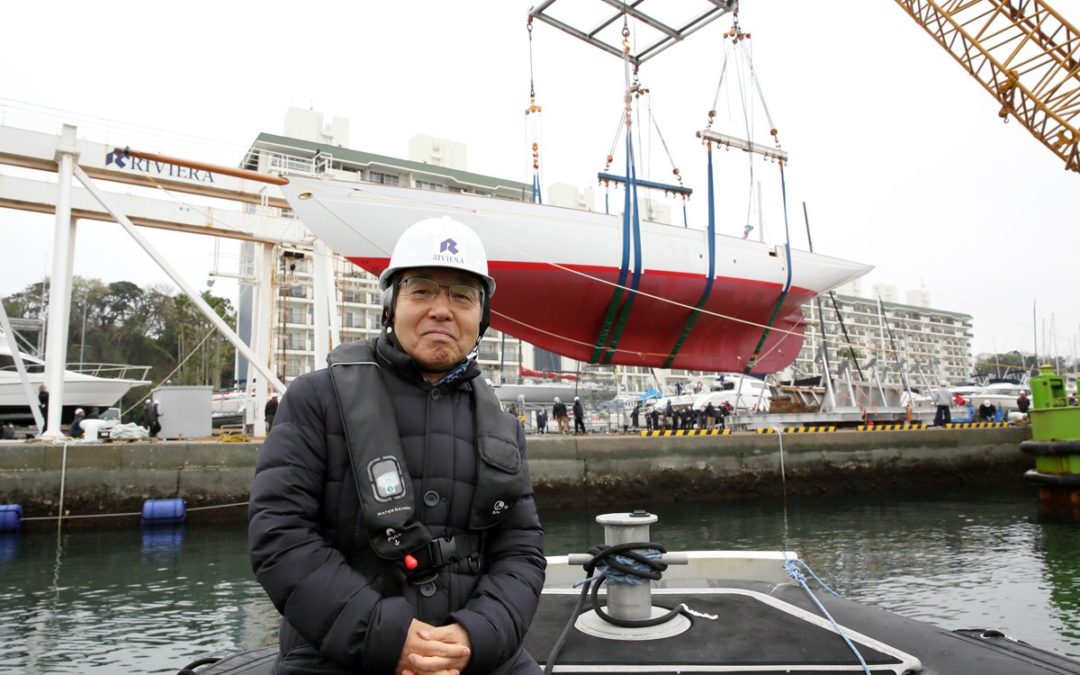
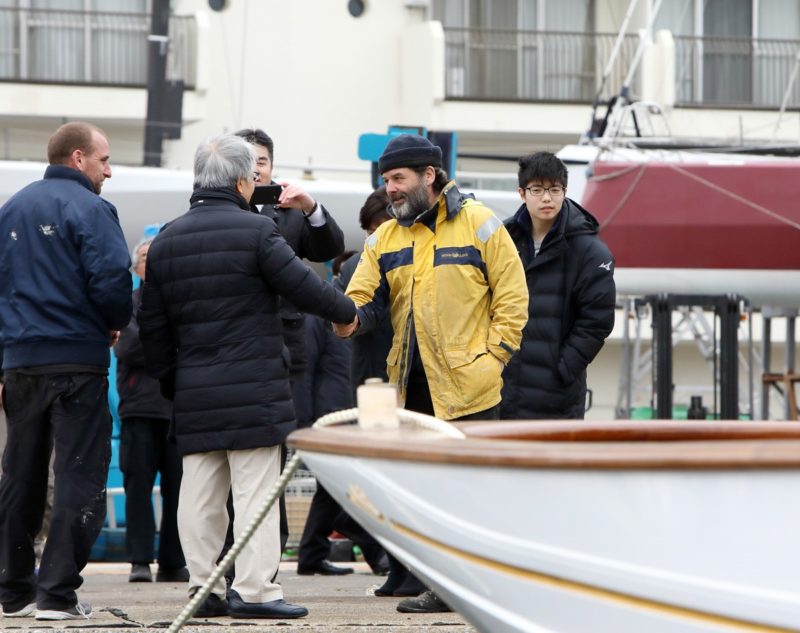
Almost 3 years of hard work by Riviera’s team of shipwrights and support staff came to a climax at the end of March, when Cynara was lifted back into the water. Because the team at Riviera had done every facet of the rebuild in-house, including moving her out of her shed, we were keen to complete the lift into the water ourselves. Riviera Chairman and CEO Mr. Noboru Watanabe (above) was on hand for the long-awaited launch.


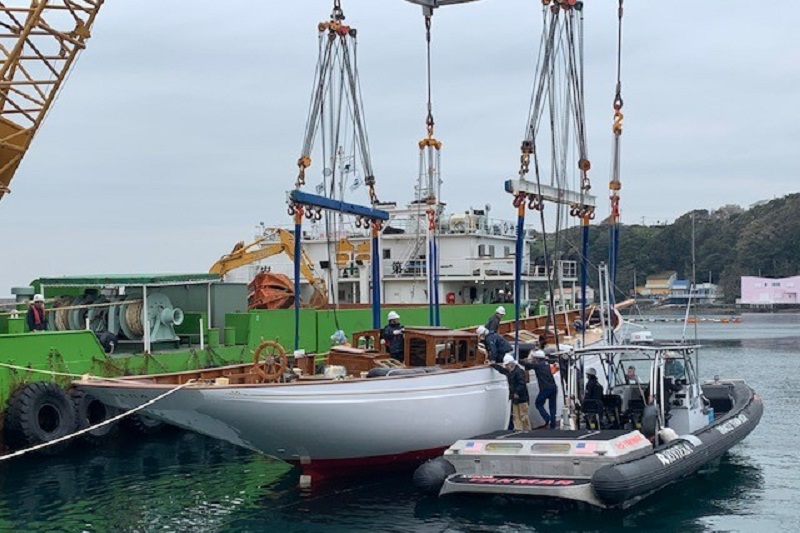
The 200-ton capacity sea crane arrived at 9:00am on Tuesday, March 31. Wide fabric slings were positioned under Cynara’s hull and lifting preparations got underway. The crane ship crew would pick her up and swing her over to the water, but they were relying on us to hook up all the lifting gear: the slings, shackles, cables and spreader bars, etc.


The center of gravity was calculated by naval architect Paul Spooner. Two slings closely spaced forward supported 50 percent of Cynara’s weight, one spring central took 25 percent and one sling under the deadwood took 25 percent. Wooden boats of Cynara’s time were never designed to be picked up with cranes—a dilemma that had haunted us for weeks. As she rose off the cradle, our staff, Ms. Takamiya, heard Paul say quietly, “She’s okay. She’s okay.” “His words stuck in my memory,” Takamiya says. “I think now I understand a little better why the feminine pronoun is used for ships in English.”


Once the load was taken on the crane’s main hook, her weight was measured at 60 tons—with no rig, very little interior, no ground tackle or inner ballast, empty tanks, not stores of any kind. The lift to the water was over in minutes rather than hours.


We had booked the sea crane for two days in case a seam gave serious trouble and we had to lift her out again. But by the next morning our shipwrights had checked out the amount of water ingress and judged everything to be order, so we said goodbye to the crane ship.
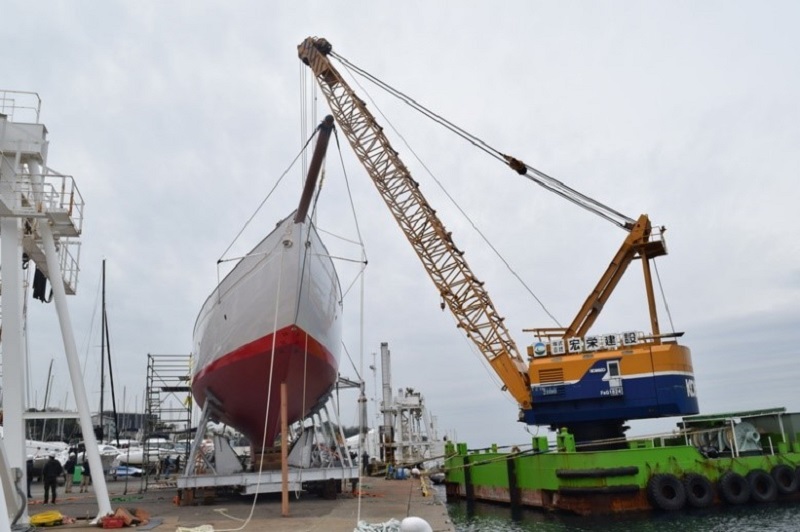
The crane ship in position for the lift.
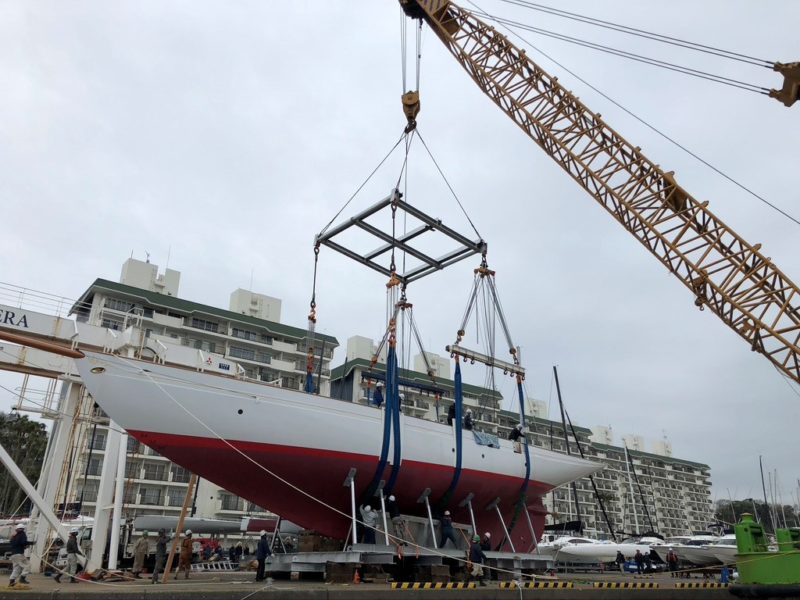
Lifting slings were positioned two at the front, one amidships, and one under the deadwood.
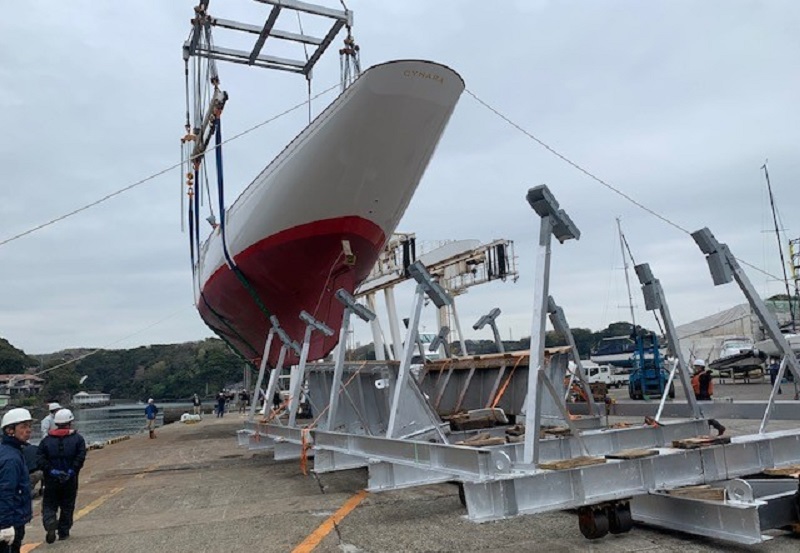
Cynara is lifted from her cradle . . .
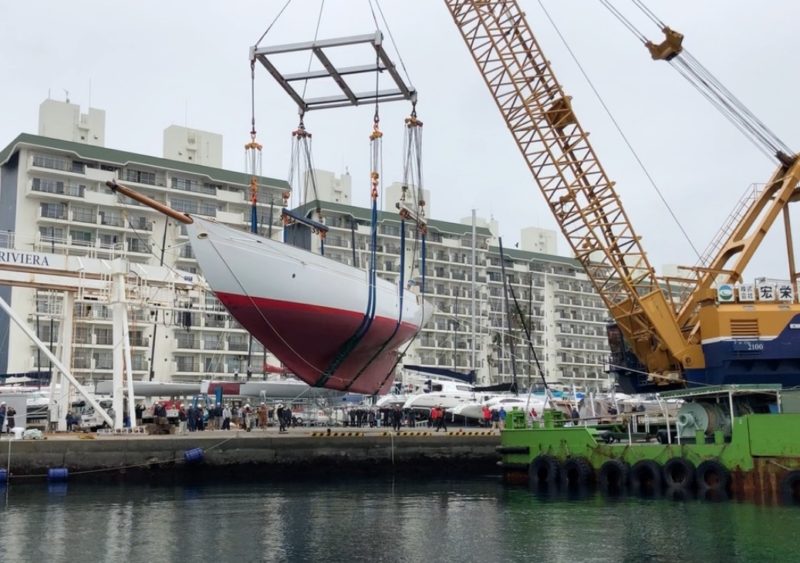
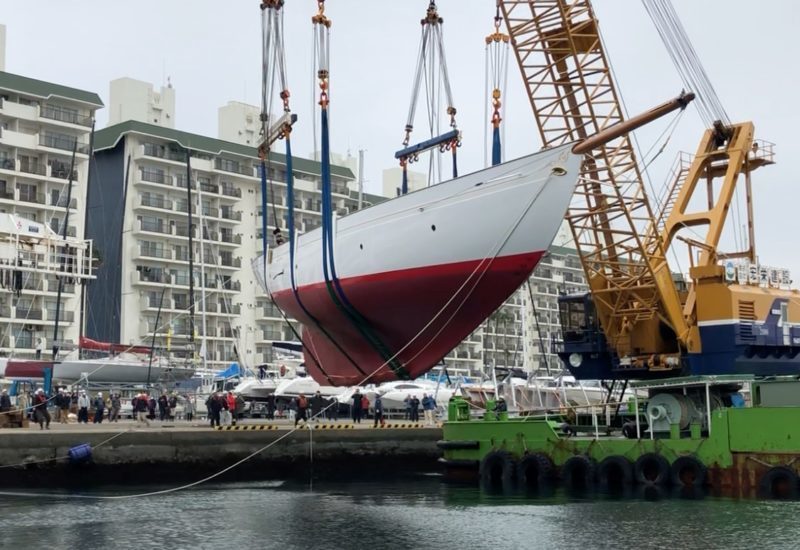
The crane turned, lifting her over the water . . .
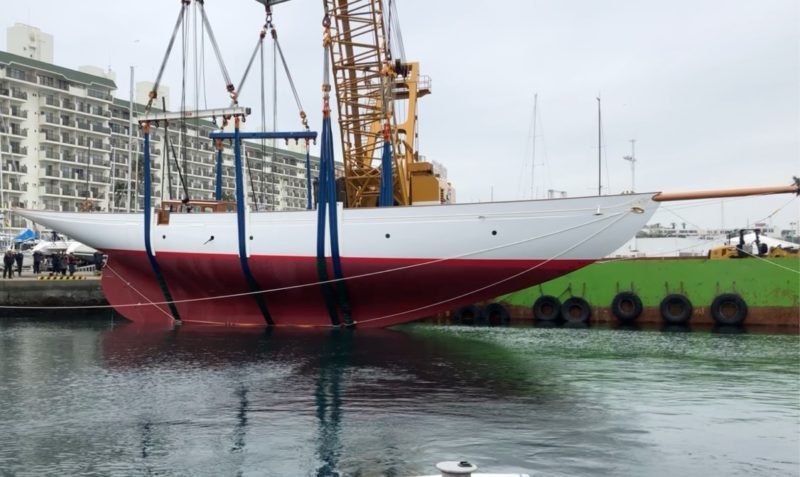
. . . before placing her down.
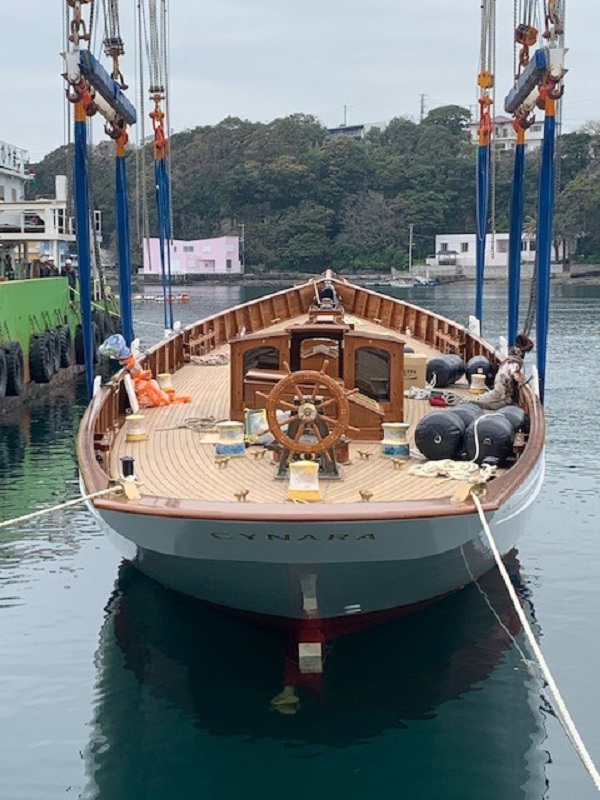
Cynara is afloat for the first time in three years.
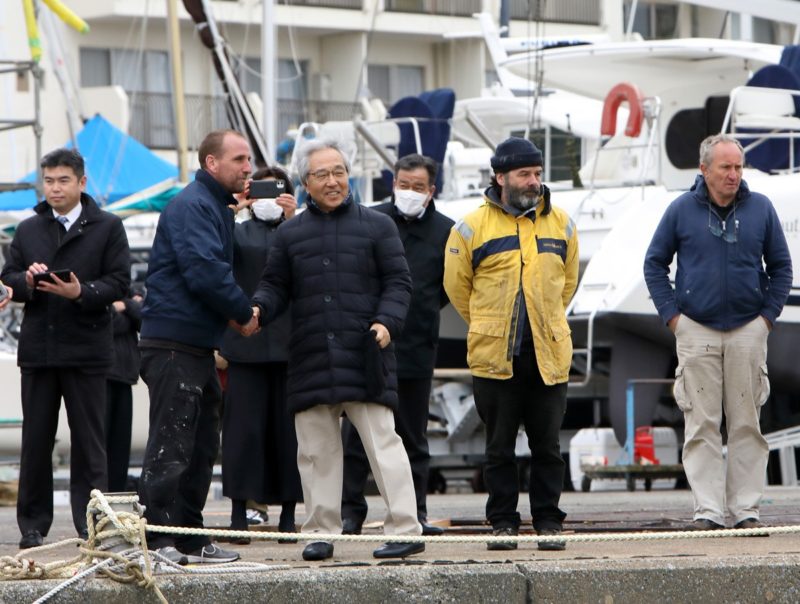
Riviera CEO Mr. Noboru Watanabe shakes hands with shipwrights Ben Hobbs (above) and Paul Harvey (below), after the successful launch of Cynara.
Workers clamber aboard to check all is well below.
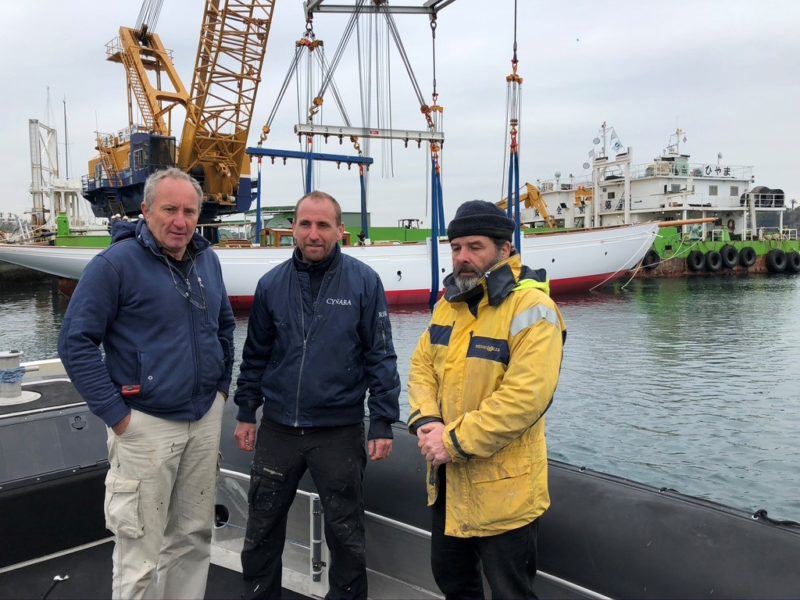
 

Shipwrights Ben (center) and Paul (right) with Ian preparing to board Cynara.


Follow Us

Restoration by RIVIERA GROUP

Restoration photos by Yoichi Yabe & RIVIERA GROUP

Text and photographs copyright © 2019
RIVIERA CO., LTD. All rights reserved.
Email : pr@riviera.co.jp
Blog — Tuesday, 24 March, 2020

Blog — Tuesday, 24 March, 2020

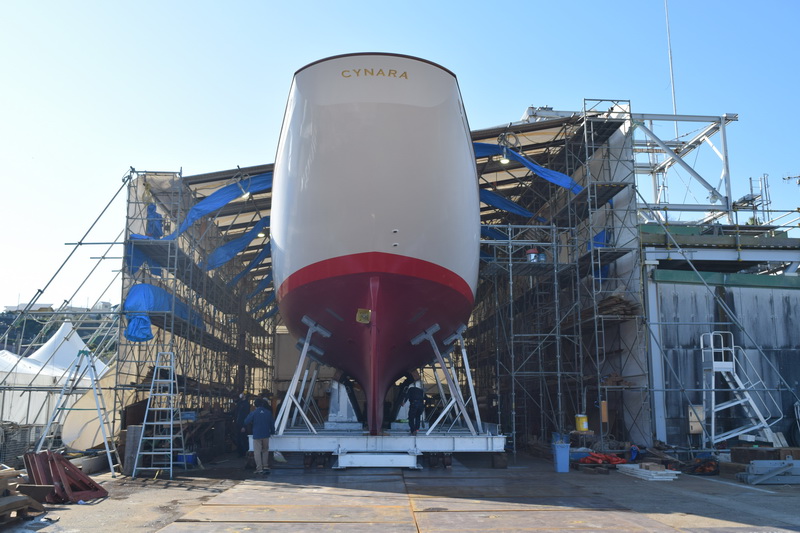
This week, Cynara finally moved out into the sunshine after two years of restoration work inside the tent. On March 15, steel workers began building the cradle to move the 75 tons of Cynara over the fifty meters to the water’s edge. Various ideas for the design of the cradle and gathering the critical parts had been going on for weeks beforehand, with the cooperation of scaffold specialists, crane operators, shipyard workers and our own marina team. The first task was to remove a quarter of the tent on the seaward side.

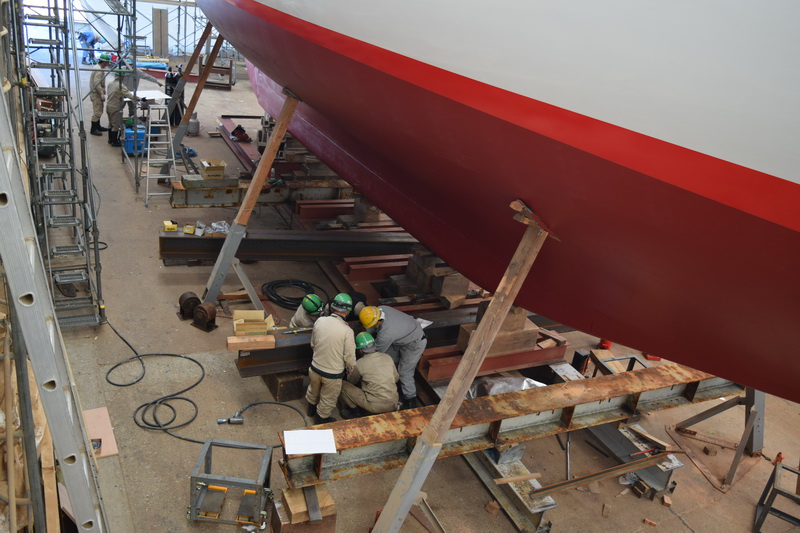
The cradle was then assembled under Cynara where she stood, and 24 heavy duty steel castor wheels in pairs were attached to support her 75 tons. Thirty 20mm thick steel plates, weighing 750kg, were then moved under the cradle, which was then lowered down on them. The boat was then blocked between the cradle and the keel before removing the blocks between the keel and ground.

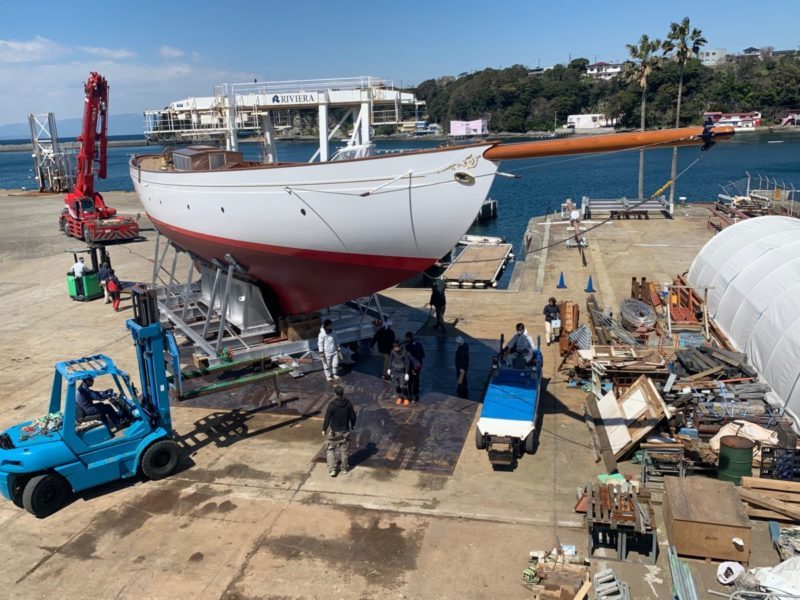
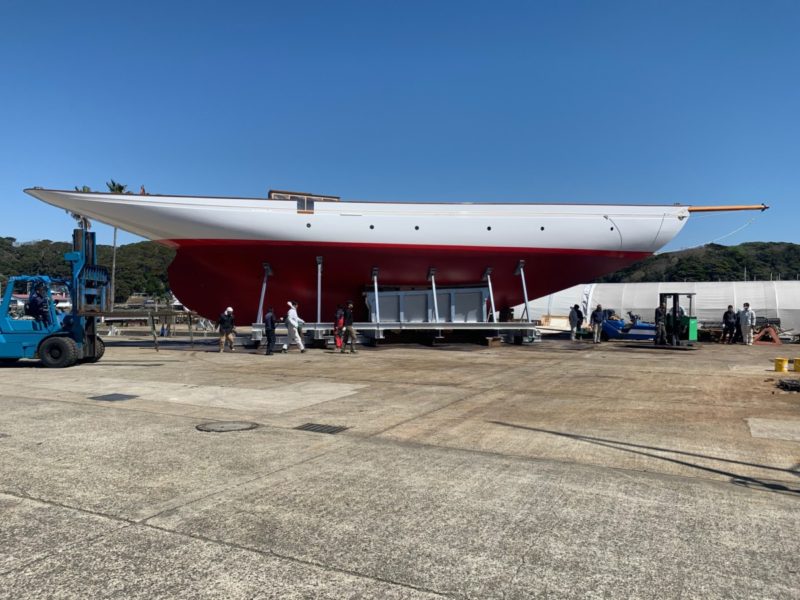
A 60-ton, 4-wheeled steering crane was hitched to the cradle to pull Cynara across the yard. The move started at around 10am and was expected to take a day and a half. As she moved off each steel sheet, it would be moved ahead to make a smooth surface. The marina team used 2 forklifts and by 4pm the same day Cynara had safely reached the water’s edge.

Next week will see the even bigger challenge of safely lifting Cynara into the water.


The shipyard steel workers put the components of the cradle together.


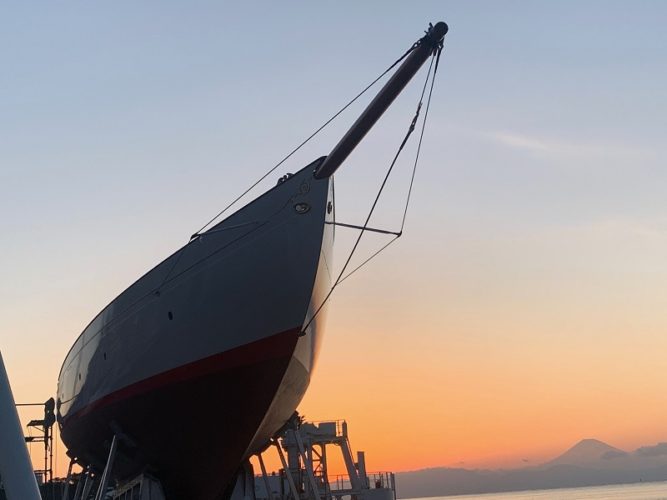
Cynara’s stern was the first part to see the light of day in two years.


The crane pulled Cynara’s cradle from the stern. We used forklifts to move the heavy steel plates from bow to stern. As the cradle wheels couldn’t be steered, the plates were greased down so the cradle could be pulled sideways.


Cynara’s beauty is breath-taking even during the move on land. The riggers will begin installing the masts after the launch.


Power and access was restored, and the work on the interior continued. Bicycles come in handy now to retrieve a tool or part from the workshop.

Follow Us

Restoration by RIVIERA GROUP

Restoration photos by Yoichi Yabe & RIVIERA GROUP

Text and photographs copyright © 2019
RIVIERA CO., LTD. All rights reserved.
Email : pr@riviera.co.jp
Blog — Wednesday , 30 October, 2019

Blog — Wednesday , 30 October, 2019

Tues. Oct. 22

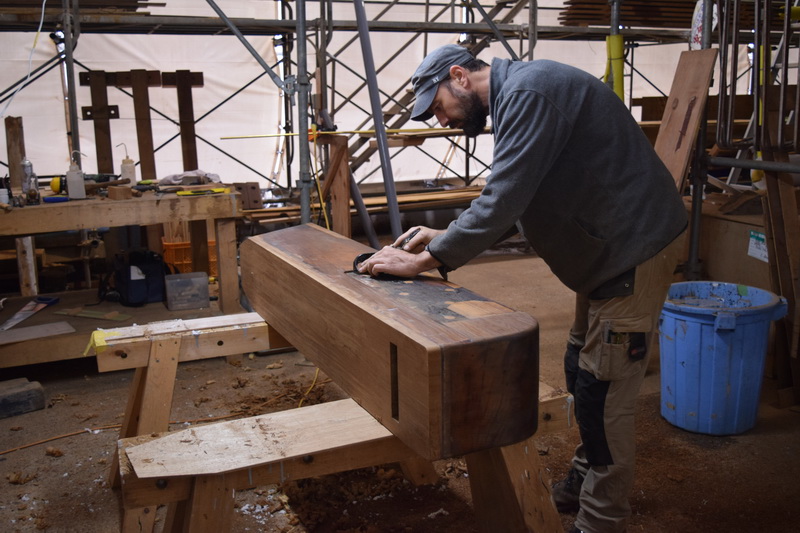
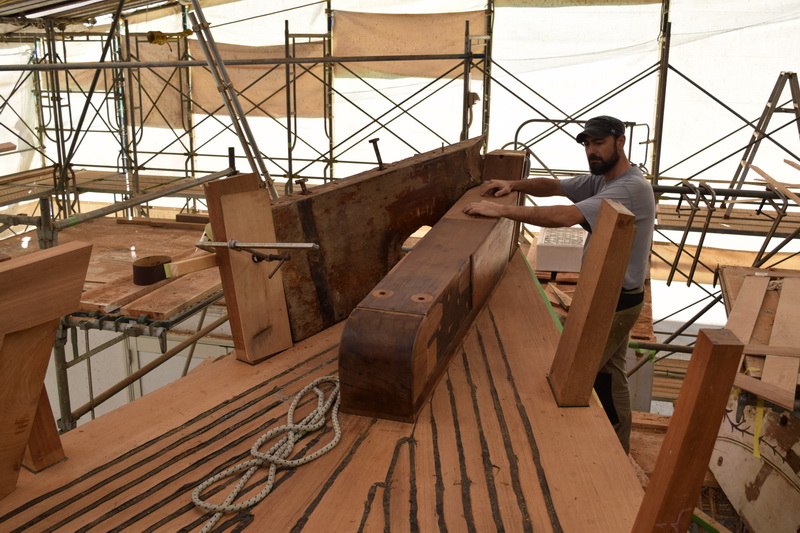
With the deck planking done, we have the entire deck as a workspace. Nico is working on the bowsprit chock, and can now put in temporary place to make sure it fits. It is a sizable piece of wood and is all original.


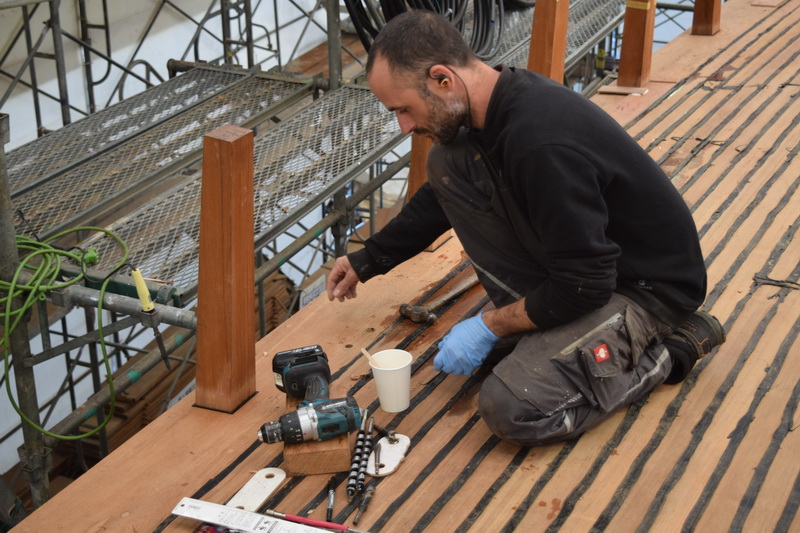
Further back, Richard is drilling and setting out deck fittings in the coverboard.


Wed., Oct. 23

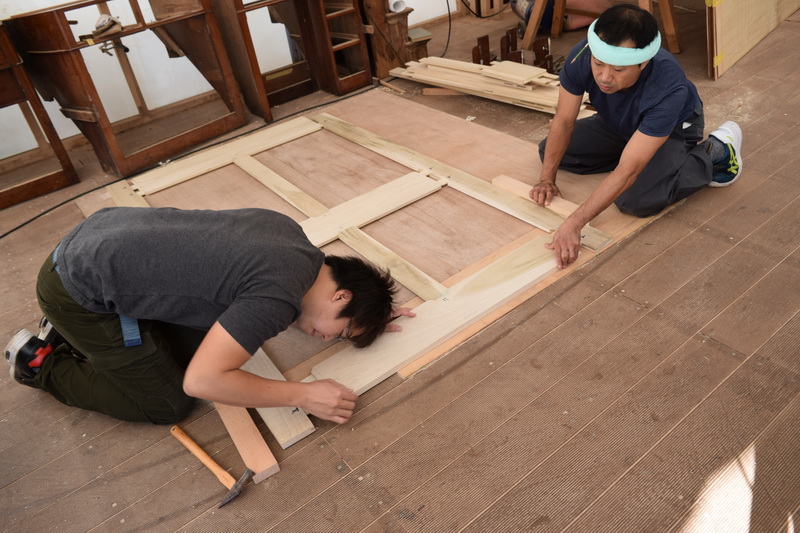
Tatsumi and Kawashima are working on the wall partitions for the interior. The wood is poplar, not often used in Japan. Paul says he chose this because it works well for painted surfaces, and because Camper and Nicholsons, who built the boat in 1927, used it in the original.


Thurs. Oct. 24

Richard, the engineer, is in his element in the engine room, and he can get possessive over his responsibilities (“This is my room,” he jokes.) It’s partly true: there is more engineering than woodwork since everything—metal tables for the generators, the engine, pumps, etc.—all have to be set up correctly for the engine to be easy to use and maintain in a limited space.


Wed. Oct .30

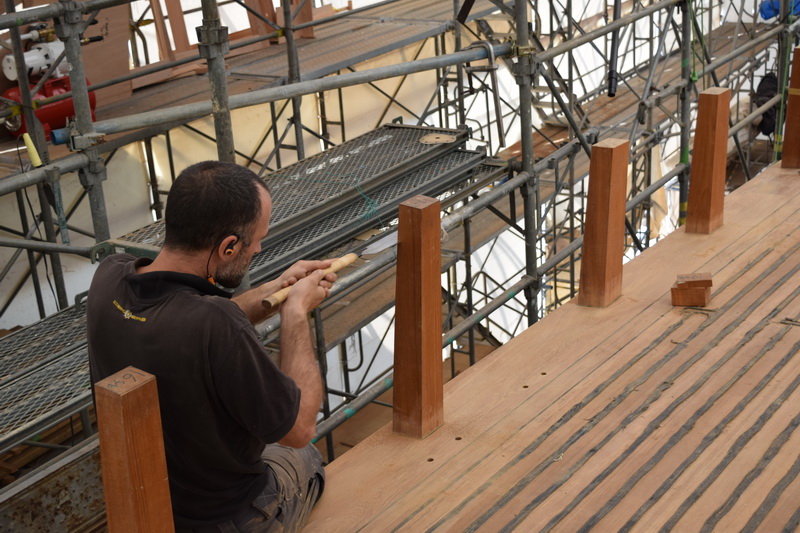
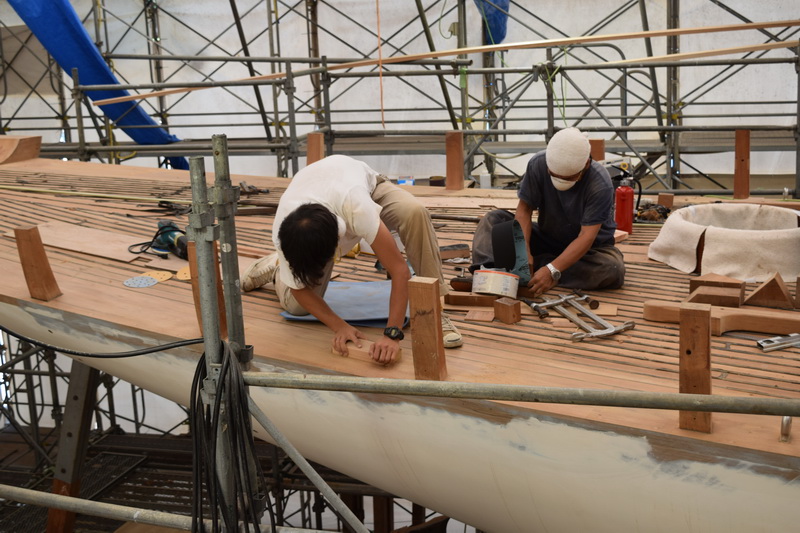
Richard the carpenter’s next step on board is to cut the top of the wooden stanchions down to the correct height (above) while another Japanese team member sands the coverboard, preparing for the first coat of varnish (below).


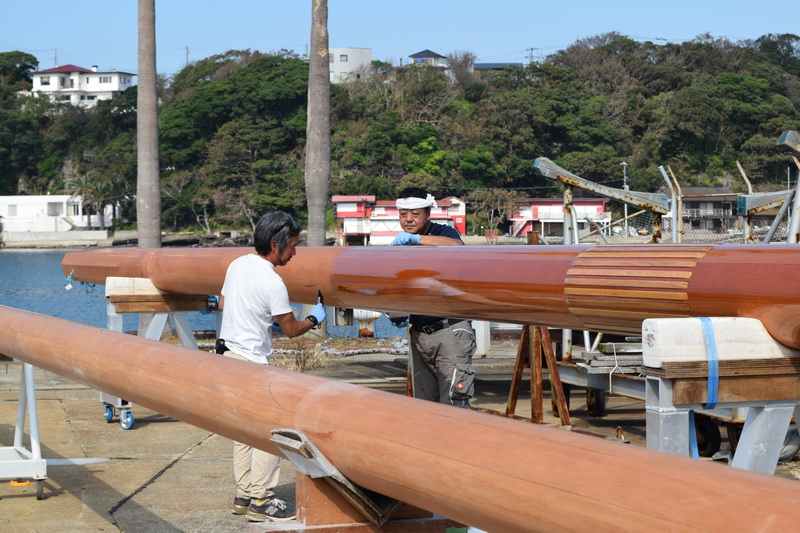
Wada has taken a central role in the varnishing of the masts, which have become much darker in tone after many coats. It is a repetitive job that requires a lot of concentration.

Follow Us

Restoration by RIVIERA GROUP

Restoration photos by Yoichi Yabe & RIVIERA GROUP

Text and photographs copyright © 2019
RIVIERA CO., LTD. All rights reserved.
Email : pr@riviera.co.jp
Blog — Monday , 21 October, 2019

Blog — Monday , 21 October, 2019

Sun.Oct. 13

Typhoon Hagibis made landfall last night just west of us on the Izu Peninsula. It ended up being one of the largest typhoons ever recorded, with over 200,000 people ordered to evacuate, and the matches for the World Rugby Cup cancelled. It was fairly violent at our location, so we ended up being extremely lucky. Parts of the main tent blew down, and the deck has been saturated with water despite being covered with plastic sheeting. This is a major concern, as we’re in the middle of gluing the planks down. We’ll have to thoroughly dry and clean the deck before finishing the gluing.

Part of the adjacent tent where we’re doing the joinery collapsed under the weight of the water that had collected on top, but fortunately, there is no serious damage to the timber that is inside. There were a few scars and dents from wind damage, but the timber is old—with plenty of scars from its nearly 100 years of use, and there’s nothing that will be noticed.


Mon. Oct. 14

By 10:00am the next day, everything had been restored to pre-typhoon condition, and work is being renewed in all areas of the project.

The crew from Centerline Marine is back laying the deck. Some of them have started caulking while others are still focused on the planking. They are using a liquid rubber compound in the seams to form a rubber seal between the planks.


Tues. Oct. 15

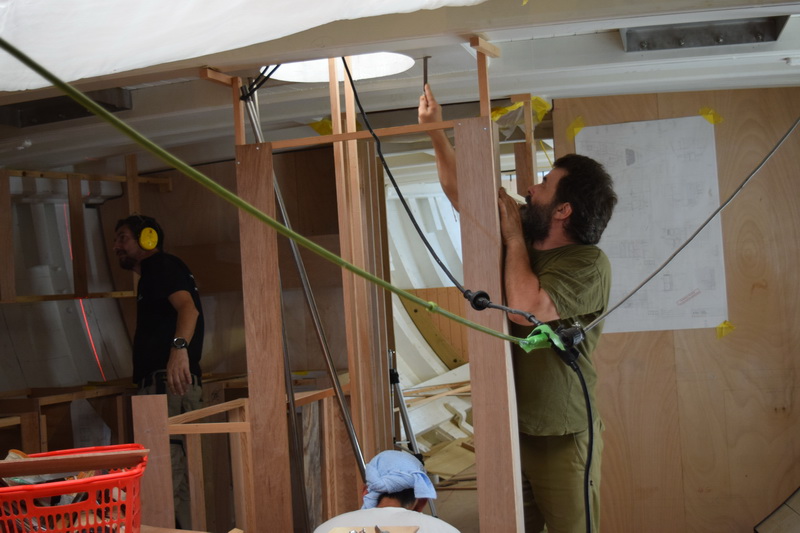
Work is continuing on the interior. Here the original bulkhead framing is being installed in the aft end of the main saloon.


Fri. Oct. 18

The planking and caulking of the deck is finished, and the six-man team, who have been working dawn until dusk, will leave next Monday. The height of the finished caulking actually is higher than the teak planks, but it will shrink over time. It will be left like this for at least a couple of weeks to set, harden and shrink—the longer the better. It will then be cut and sanded flush with the teak planks.

Leaving the sanding as long as possible also protects the teak, since continuing work on the deck will get it dirty. Once the teak is sanded, it must be kept clean or the final appearance of the deck will be spoiled.

According to the plan, Paul and the other members of the crew will do the final sanding around the beginning of December.


Monday. Oct. 21

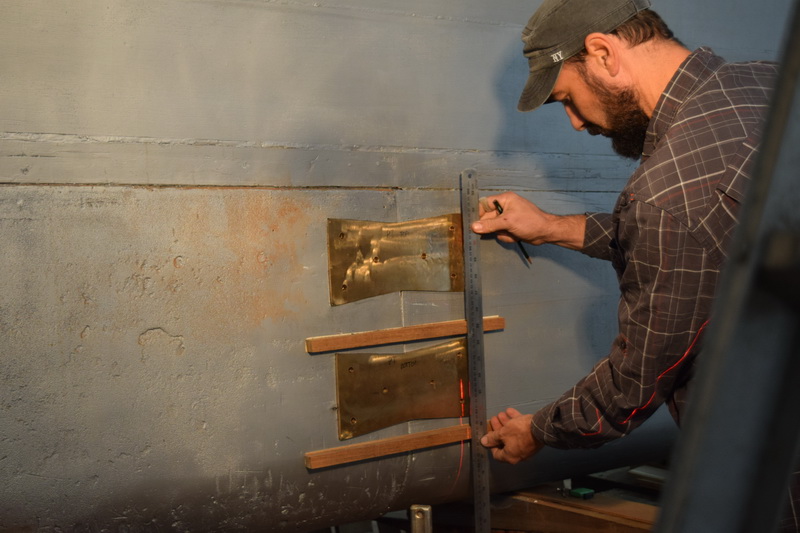
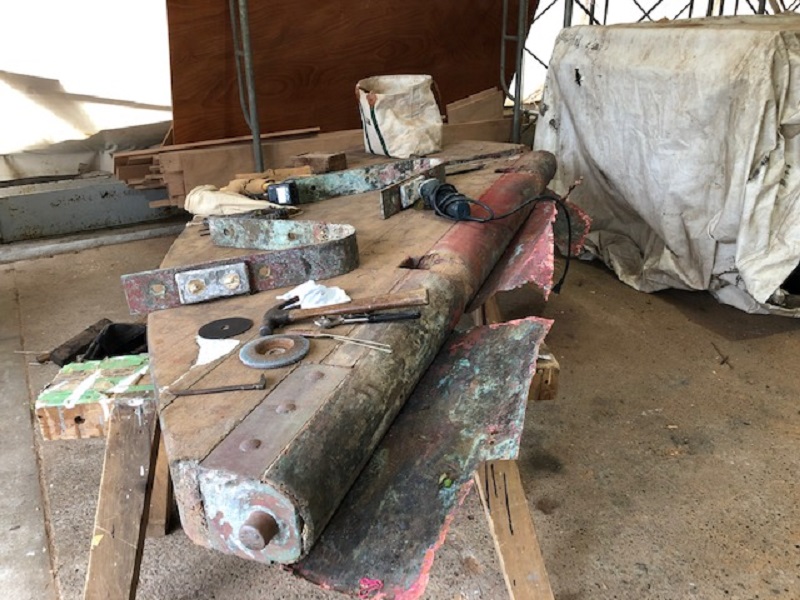
Nico is fitting two naval brass dovetail plates between the lead ballast keel and the wood false keel. The plates are riveted through the keel, which helps stop any movement between the two. Work on the rudder has begun (below) and the work on the keel must be finished before the rudder is installed.


Follow Us

Restoration by RIVIERA GROUP

Restoration photos by Yoichi Yabe & RIVIERA GROUP

Text and photographs copyright © 2019
RIVIERA CO., LTD. All rights reserved.
Email : pr@riviera.co.jp
Blog — Thursday , 10 October, 2019

Blog — Thursday , 10 October, 2019

Wed. Oct. 2

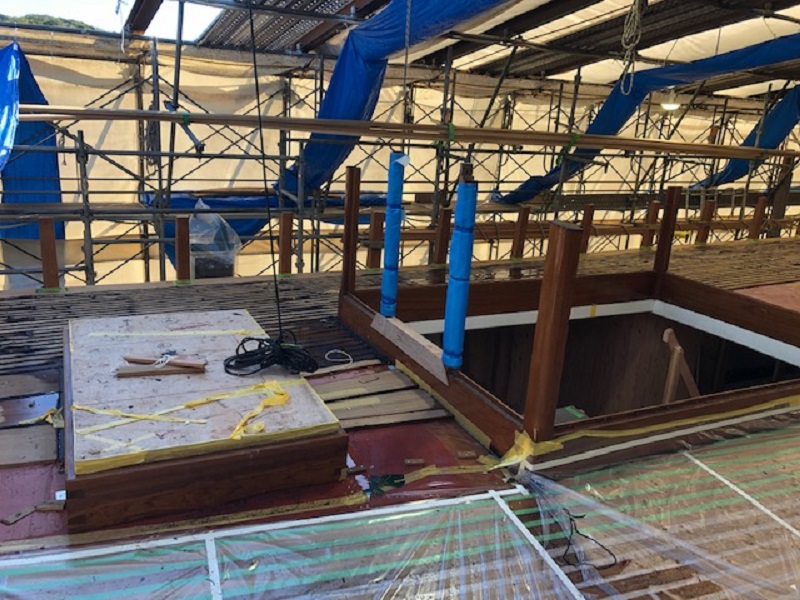
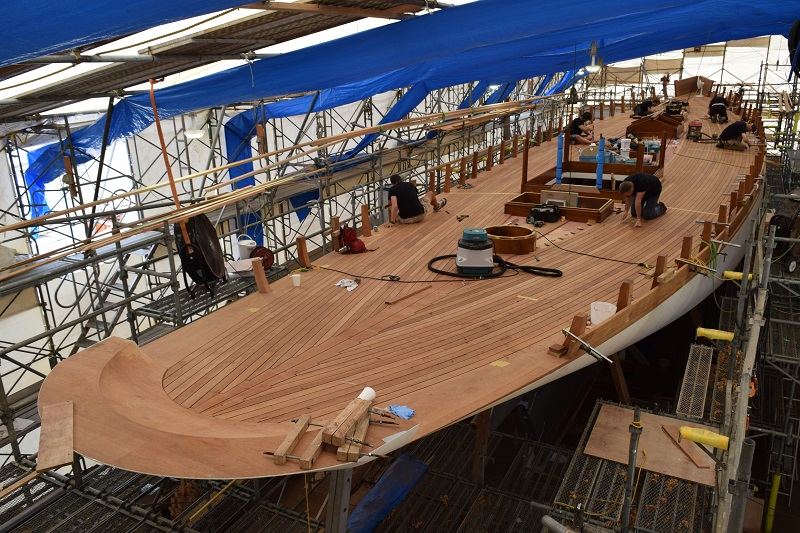
As we enter October, the temperature has fallen, which has made life a little easier for the shipwrights. But we’re still in the middle of typhoon season, and Cynara is protected only by a tent. A smaller tent stands adjacent—where work on the interior, the masts and the spars is being done.


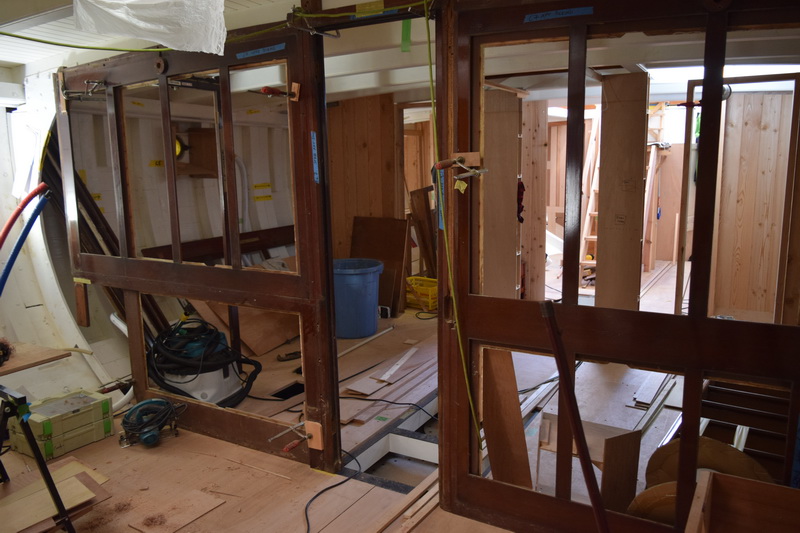
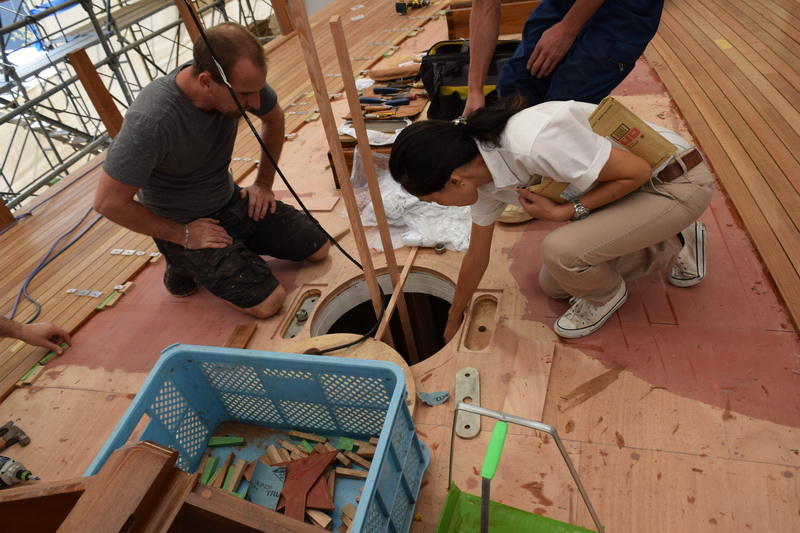
Paul and Carlos (above) are onboard in the galley area, where the mast will pass through. They’re using temporary patterns and frames to check the positions of where the bulkheads and furniture will go.

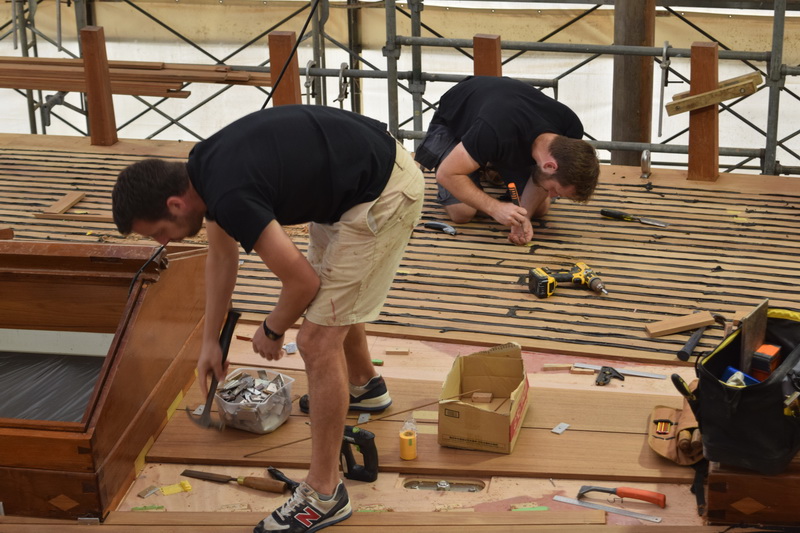
On deck, Ben is fitting the rods that connect the deck to the hull. The rods are bolted through the deck and run down alongside the mast and into the mast step, and firmly bolted to the keel. They add strength around the mast, as the blocks and rigging will be putting high loads and stresses on the deck in this area.


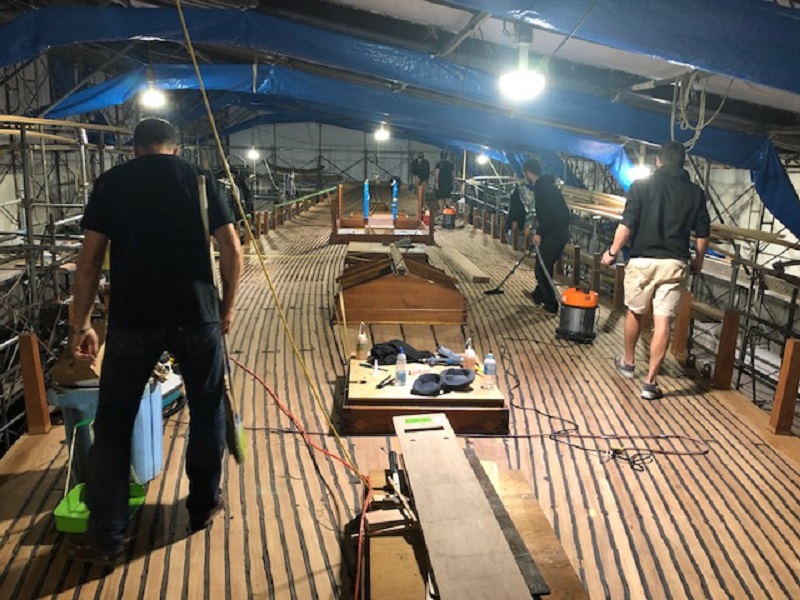
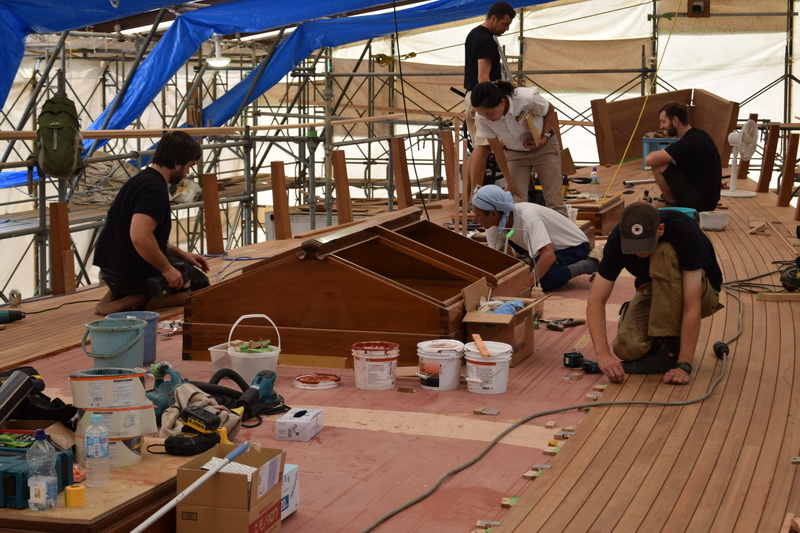
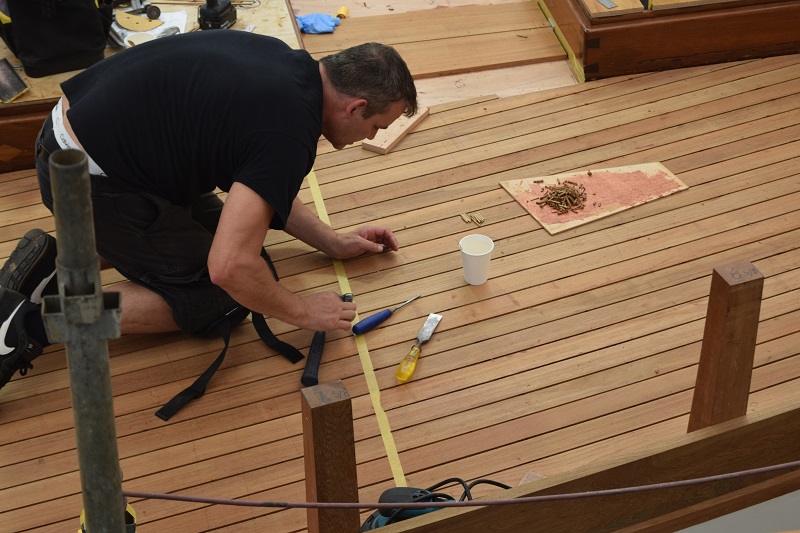
A team from Southampton in the UK called Centerline Marine was brought in to lay the teak deck planking. Teak laying is a very time-consuming process, so this allowed Riviera’s team of shipwrights to focus on other tasks. The deck beams were first covered with a plywood sub-deck, which was first “faired” to ensure there were no high spots or hollows. Then the teak planks were laid on top, one by one. Each plank was machined to include the seam for caulking before they were glued down.


Tues. October. 8

Mike, from Centerline Marine, is removing any extra glue from the caulking seams. He also has to cut the butt joints between each plank end.


You can see from this photo that the planking is almost complete. The caulking between the planks is the next part of the process.


Thurs. Oct. 10

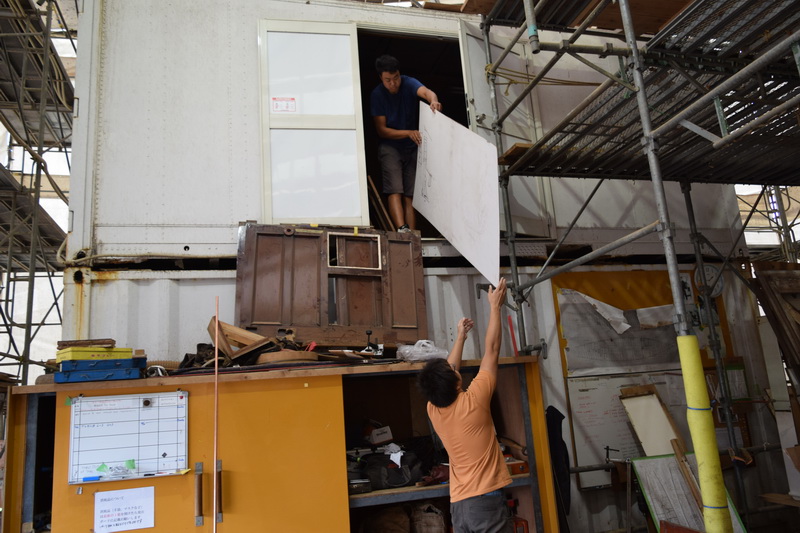
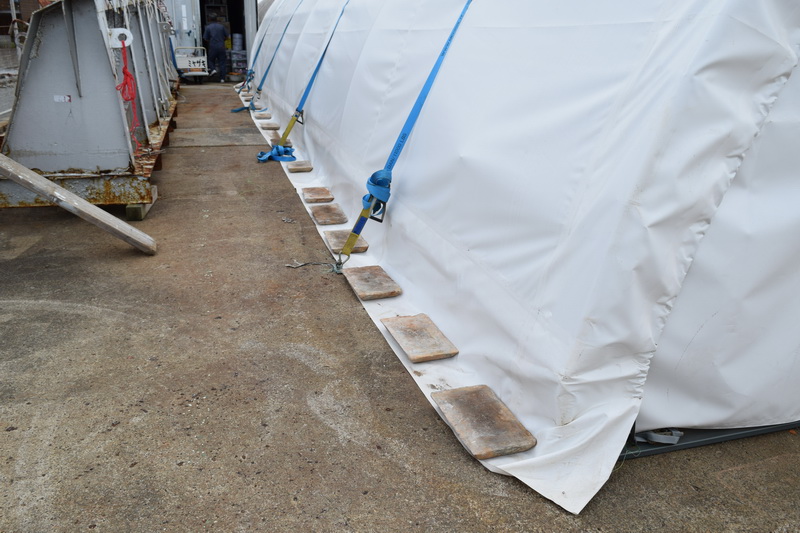
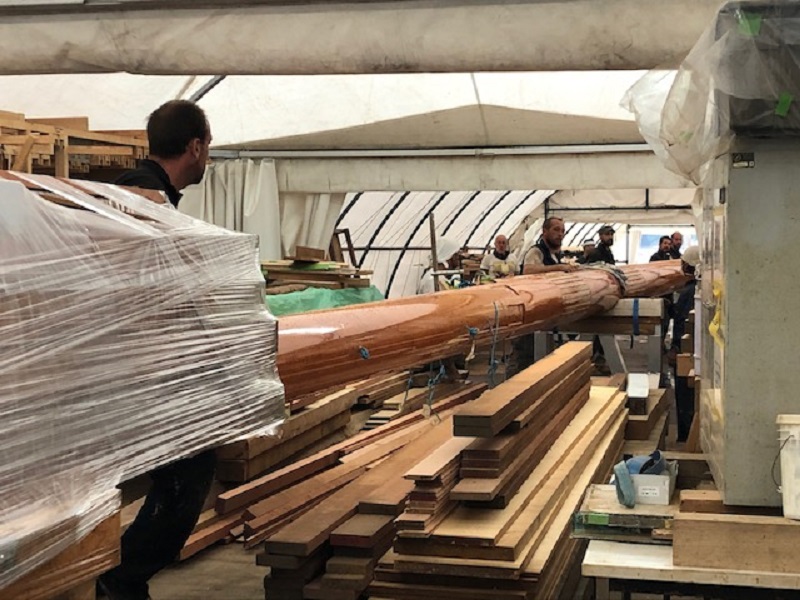
Work had to come to a halt in order to prepare for Typhoon Hagibis (Typhoon 19, as it’s called in Japan). We are storing all the important interior fittings, lashing the masts down (above), storing other parts in elevated containers (top) and taking other measures (middle) to protect the tents from the wind. According to weather reports, the typhoon is scheduled to come ashore very close to our location about October 12.

Follow Us

Restoration by RIVIERA GROUP

Restoration photos by Yoichi Yabe & RIVIERA GROUP

Text and photographs copyright © 2019
RIVIERA CO., LTD. All rights reserved.
Email : pr@riviera.co.jp